
Conservation in Practice
My work with local communities and forest departments focuses on building practical, empathetic approaches to human–elephant coexistence. Over the years, I have collaborated with smallholder farmers, indigenous communities, and forest officials across southern India to develop solutions that balance safety, livelihood security, and ecological well-being.
This involves co-creating field strategies - from participatory conflict mitigation and early warning systems to capacity-building programmes for frontline staff - that move away from control-based responses toward shared responsibility and care. By combining behavioural insights from elephants with local knowledge and institutional engagement, my goal is to transform conflict management into a long-term, trust-based process of coexistence.
Living with Elephants
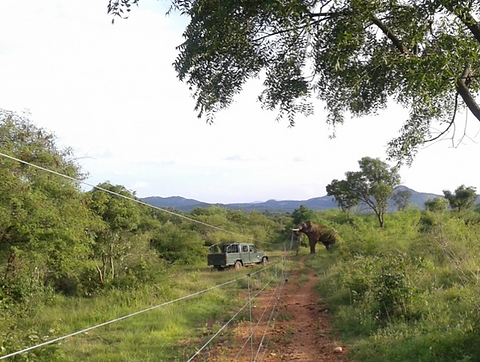
My approach to human–elephant conflict mitigation is grounded in field-based collaboration and practical problem-solving. I work with local communities to map elephant movement patterns, identify high-risk zones, and design site-specific strategies such as crop protection measures, early warning systems, and safe passage routes. Together with farmers, we test low-cost deterrents, improve storage practices, and plan land use to reduce encounters.

Engaging Frontline Staff
I work closely with Forest Department staff to strengthen on-ground responses to human–elephant conflict through training, data use, and coordinated field action. My approach focuses on understanding elephant behaviour to guide management decisions, reducing reliance on reactive measures like chasing or capture. We develop and implement standard operating procedures for conflict response, population monitoring, and early warning systems. Regular capacity-building workshops train frontline staff to interpret elephant movement data, communicate effectively with communities, and manage conflict situations safely and ethically. The aim is to equip teams with practical tools and knowledge for proactive, science-based, and humane conflict mitigation.
Learning in the Field
I mentor students interested in wildlife behaviour, human–animal interactions, and coexistence studies, with a focus on developing strong field and analytical skills. My approach is hands-on and collaborative—students learn to design research projects, collect and interpret behavioural and spatial data, and engage ethically with local communities and institutions. I encourage critical thinking, interdisciplinary learning, and communication that bridges science and society. The goal is to help students grow into independent researchers who can connect ecological understanding with real-world problem-solving in conservation.
